Skip to content Skip to sidebar Skip to footer

Creation of automation projects for monitoring civil buildings and structures

Monitoring & Engineering provides design services for automated monitoring systems for civil buildings and structures to monitor the technical condition and reliability of structures under construction. The main purpose of developing and applying the project to an automated monitoring system is to reduce the risk of actual destruction of the facility during construction and subsequent operation by detecting deviations in the parameters of building structures and components from the calculated values at an early stage of their occurrence.

Icon

Timely identification of potential risks

The monitoring system allows you to detect deviations in advance, such as precipitation, deformations or vibrations, reducing the likelihood of accidents and minimizing threats to people and property.
Icon

Improving operational safety

The monitoring system is designed so that it can be adapted and expanded as production volumes increase. This minimizes the cost of upgrading in the future.
Icon

Compliance with regulatory requirements

The project is being developed on the basis of current standards and regulations (including the SNiP of the Republic of Kazakhstan 3.02-05-2010 ), which simplifies the approval and examination process
Icon

Reducing operational risks

Timely detection of deviations allows minimizing the cost of emergency repairs, optimizing maintenance planning and extending the service life of the facility.
Icon

Compliance with regulatory requirements and environmental safety

The design takes into account the unique geotechnical conditions of the facility, operational loads and customer requirements, which ensures high accuracy and reliability of the system.
Icon

Flexibility and scalability

The developed systems are easily integrated into the existing infrastructure of the facility and can be upgraded or expanded in the future, adapting to changing customer requirements.
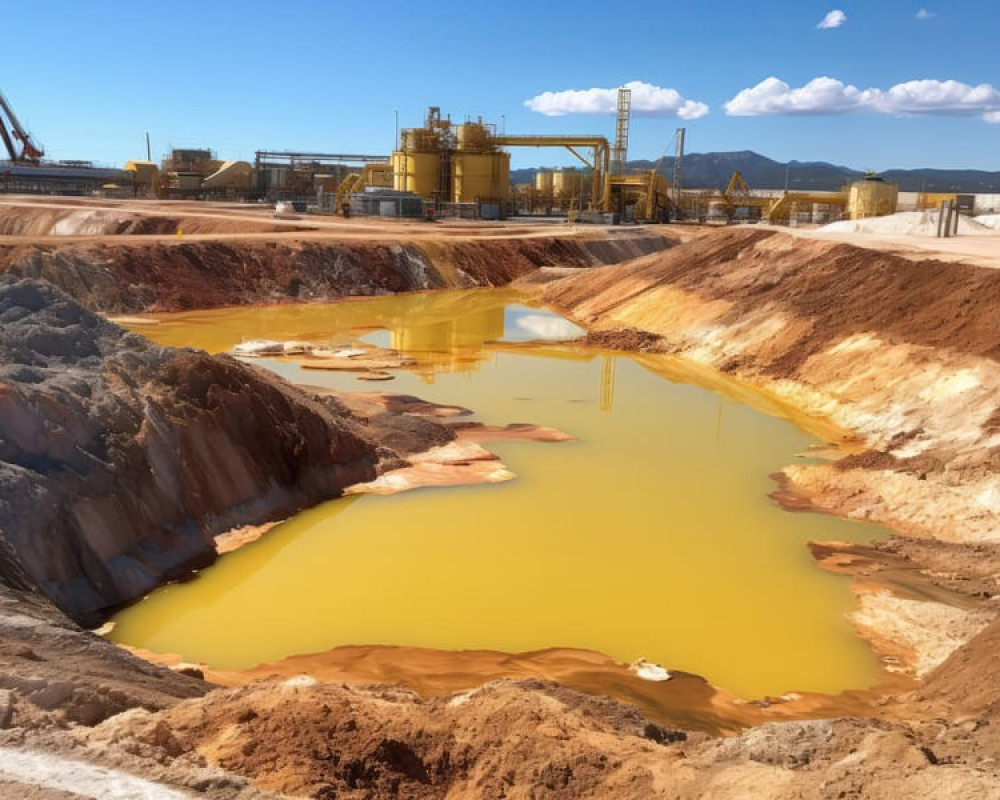
Our project team consists of specialists in geotechnics, hydrogeology, engineering geology and automation, who work closely with the customer’s experts in structural geology, hydrogeology, hydrology, and tailings. This integrated approach ensures the development of reliable monitoring parameters that allow real-time monitoring of the dam condition, monitoring changes in parameters and predicting potential risks.

Design stages

The timing of the project depends on the design features (size and functional purpose) of the facility, geotechnical conditions (soil properties and groundwater level) and individual customer requirements. We always coordinate the schedule of work with the customer, taking into account his deadlines for the completion of the project. We strive to ensure a balance between the quality of design and the speed of execution. On average, the implementation includes the following steps::

  1. Conducting consultations with the customer to determine the monitoring objectives and key tasks.
  2. Study of project documentation.
  3. Analysis of the geological and geotechnical characteristics of the object.
  4. Identification of key monitoring parameters (precipitation, deformations, vibrations, temperature changes).
  5. Development and approval of technical specifications (TK), taking into account the customer’s requirements.
  6. Coordination with the customer of brands of manufacturers of equipment and materials of automation systems used in the project.
  1. Design of monitoring automation schemes.
  2. Placement of sensors (tilt meters, strain gauges, precipitation sensors).
  3. Data transmission schemes (wired or wireless).
  4. Planning the infrastructure for data collection, processing, and storage.
  5. Preparation of engineering drawings and technical documentation.
  6. Drawings with the placement of equipment on the site.
  7. Wiring and switching schemes for equipment.
    Cable logs and material specifications.
  8. Development of cost estimates to estimate the cost of the project.
  1. Provision of project documentation to the customer for approval.
  2. Making necessary changes based on the customer’s comments.
  3. Support of the passage of the automation project in the examination.
  4. The final revision of the documentation in accordance with the requirements of the examination.
  5. Obtaining a positive expert opinion
  1. Transfer of the complete set of project documentation to the customer.
  2. Conducting consultations on further implementation and operation of the system.
Total average duration: from 1 to 2 months

The introduction of a monitoring and management system for ground structures will allow us to form a comprehensive vision of the control processes of the tailing dump at all its stages and provide managers and specialists at various levels with information to increase the efficiency of control actions.


Мы готовы ответить на все ваши вопросы и помочь вам выбрать оптимальное решение

Оставьте заявку

    Оставьте заявку